Minimally Invasive & Laparoscopic Surgery for Pets in Ogden, Utah
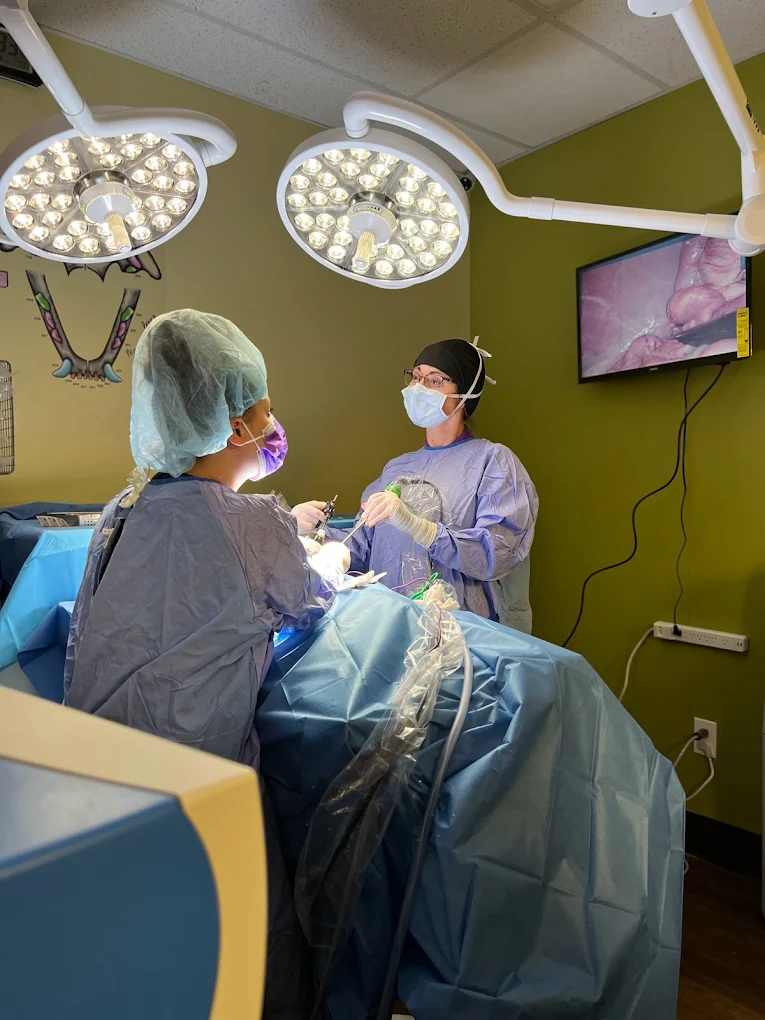
At Wasatch Hollow Animal Hospital, we’re proud to specialize in minimally invasive surgery, including laparoscopic procedures that reduce pain, speed recovery, and improve outcomes for your pet. This advanced surgical approach allows our veterinarians to perform precise procedures through tiny incisions using specialized instruments and a high-definition camera.
A study published in the Journal of the American Veterinary Medical Association found that laparoscopic spays cause up to 65% less post-operative pain than traditional open surgery. By using the same minimally invasive techniques trusted in human surgery, our team can offer your pet the same gentle, high-tech standard of care you’d expect for yourself. Common minimally invasive procedures include spays, biopsies, and exploratory surgeries—all performed with less trauma to surrounding tissues and greater comfort for your pet.
Because these surgeries are minimally invasive, most laparoscopic procedures are performed on an outpatient basis—your pet typically recovers at home the same day, rather than the overnight hospital stay often required after traditional open surgery. Beyond less pain, laparoscopy also causes less overall surgical stress on your pet’s body, which means shorter recovery times and a lower risk of complications. Our team has extensive experience with laparoscopic techniques and is dedicated to providing the safest, most comfortable surgical experience possible.
If your pet needs surgery and you’re seeking a gentle, high-tech alternative to traditional methods, contact Wasatch Hollow Animal Hospital in Ogden or call us today to schedule a consultation about minimally invasive and laparoscopic surgery. Our team will walk you through what to expect before, during, and after the procedure, so you feel confident every step of the way.
What is Laparoscopy?
Laparoscopy, or minimally-invasive surgery, is a way to explore the organs of your pet’s abdomen using only tiny key-hole incisions. Using these incisions (generally 3/16”), we can insert a camera and our surgical instruments to perform surgery. Laparoscopy is a safer method of surgery because everything that is done is under direct magnified visualization. Organs, such as your pet’s ovaries, do not need to be pulled out of the body to allow the surgery to be performed so there is less trauma to the internal structures of your pet’s abdomen. Recent studies have shown the use of laparoscopy to be a less traumatic and less painful alternative to traditional procedures, such as a spay.
What is a Spay?
A spay is simply the surgical sterilization of a female dog or cat. Depending on where you live, you may hear it called by several other names, including a spey, an ovariectomy (removal of the ovaries only), an ovariohysterectomy (removal of the ovaries and uterus), sterilization surgery, desexing, or female neutering. Whatever term is familiar to you, the laparoscopic approach described below applies the same way. This approach is available for both dogs and cats, and spaying still offers the same long-term health benefits, including preventing unwanted litters and reducing the risk of certain reproductive cancers, along with behavioral benefits many pet owners appreciate.
Traditional Spays
With traditional spays, a 1–4” incision is made in the abdominal wall. The ovaries are then blindly hooked and the ovarian ligament is torn from the body wall. This tearing causes pain and can cause bruising. In traditional spays, most vets also unnecessarily remove the uterus. Due to the location of the uterus and the attempt to minimize the surgical incision, significant tension is placed on the body of the uterus which may cause trauma and bleeding. Because of this added trauma, pets undergoing a traditional spay typically require an overnight stay for monitoring and pain management.
LAP Spays
A LAP spay is short for a Laparoscopic OVE (ovariectomy). This is a minimally-invasive spay that removes the ovaries from healthy dogs and has been shown to be a less painful alternative to traditional spays. With this technique, 2 small keyhole incisions are made into the abdomen and our laparoscopic equipment is used to perform the surgery. The ovarian ligament is not torn from the body but carefully cut and cauterized with virtually no bleeding or pain. No tension is placed on the uterus (which is not removed). Because of the enhanced visualization, there is less of a chance of leaving ovarian tissue behind. A study published in the Journal of the American Veterinary Medical Association (JAVMA) found that laparoscopic spays cause up to 65% less pain than traditional spays, meaning a faster recovery and less trauma to their body. Because the procedure is so much less invasive, most pets go home the same day rather than staying overnight, and activity restriction is only recommended for the first 2–3 days after a LAP spay versus 7–14 days for a traditional spay.
Traditional Spay vs. Laparoscopic Spay at a Glance
Incision size: 1–4 inch incision (traditional) vs. two tiny 3/16-inch keyhole incisions (laparoscopic)
Post-operative pain: Standard open-surgery pain vs. up to 65% less pain
Activity restriction: 7–14 days vs. 2–3 days
Hospital stay: Often overnight vs. same-day, outpatient discharge
Visualization: Blind tearing of the ovarian ligament vs. precise, magnified cauterization
Infection risk: Larger incision with more exposure vs. two tiny, quickly-healing incisions
Anesthesia time: Comparable for both approaches, with laparoscopy offering a safer overall recovery
Preventative Gastropexy
Laparoscopy is also a less invasive alternative for preventative gastropexy. This surgery is the only proven method for preventing Gastric Dilatation-Volvulus (GDV), which is common in deep-chested dogs such as Great Danes, German Shepherds, Irish Setters, Bernese Mountain Dogs, Saint Bernards, Weimaraners, and Boxers. A preventative gastropexy anchors the stomach to the body wall, preventing torsion. Normally this surgery requires a long incision of at least 8–12 inches, but with laparoscopy-assisted surgery, the incision is less than 2 inches. For at-risk breeds, this procedure can often be performed at the same time as a laparoscopic spay, meaning your pet only needs one anesthetic event and one recovery period.
Cryptorchid Neuter
Laparoscopy is also a less invasive alternative for a cryptorchid neuter. A cryptorchid male is an animal whose testicles (one or both) have not descended into the scrotum. Finding these testicles in the abdomen can be difficult and requires a large incision to safely perform the surgery. Laparoscopy allows great visualization and magnification of the internal organs without the need for a large incision.
What are the Advantages of Laparoscopy?
Laparoscopic spays have been found to cause 65% less pain compared to traditional open spays.
The entire surgery is performed through two tiny incisions (generally 3/16”). Smaller incisions reduce pain, recovery time, and complications.
A magnified view of internal organs allows precise cauterized incisions with no tearing or bruising.
Laparoscope-assisted gastropexy can be performed with a 1.5-inch incision instead of an additional 8–12 inch incision needed in traditional gastropexy.
The approach mirrors the same minimally invasive techniques used in human surgery, giving pets the benefit of decades of refined surgical technology.
Laparoscopy Surgery for Pets in Ogden FAQs
Yes. Even though the incisions are tiny, they can still become infected if your pet licks them. However, pets are generally less interested in these smaller incisions compared to traditional spays due to reduced pain.
Only 2–3 days of activity restriction are recommended after a LAP spay, compared to 7–14 days for a traditional spay. However, if your pet also has a preventative gastropexy performed, they’ll need about 3 weeks of restricted activity for proper healing.
No. Studies show no benefit in removing the uterus in young, healthy animals. European veterinarians have long performed ovariectomies (removal of ovaries only), which result in less pain and faster recovery.
No. Pyometra is hormonally driven by progesterone from the ovaries. Once the ovaries are removed, the condition cannot occur.
No. A laser spay only uses a laser to make the skin incision. The main source of pain in traditional spays comes from tearing the ovarian ligament, which still occurs in laser spays. Laparoscopy avoids that entirely.
Most healthy dogs and cats are excellent candidates for laparoscopic spays, gastropexy, or biopsies. During your consultation, our veterinarians will review your pet’s health history and determine whether a minimally invasive approach is right for them, and answer any questions you have along the way.


.jpeg)
.jpeg)
.jpeg)